 ManualJPro
Blower Door Testing: Ace IECC Requirements (in 2024)
Learn how blower door testing ensures IECC compliance, lowers energy costs, & wins bids. Discover the exact steps & tools needed! Get started now.
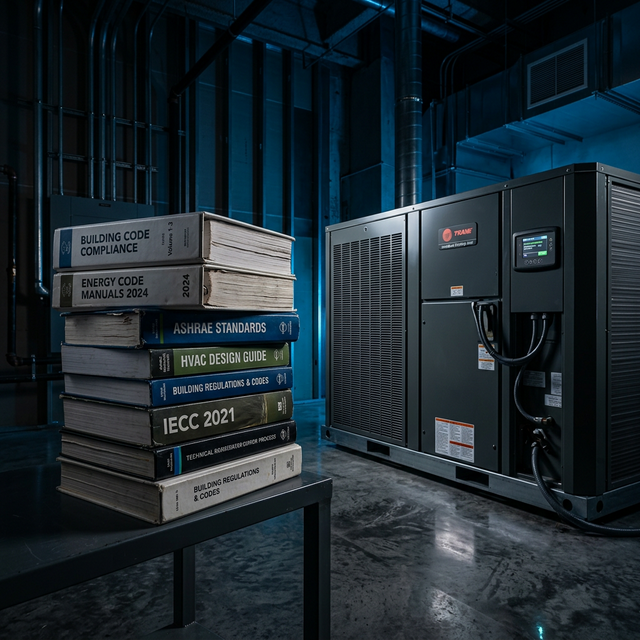
Blower door testing is essential for verifying building airtightness and meeting the International Energy Conservation Code (IECC) requirements, which ultimately reduces energy consumption and improves building performance.
Understanding Blower Door Testing and IECC
The International Energy Conservation Code (IECC) sets minimum energy efficiency standards for residential and commercial buildings. A key component is air leakage, measured using blower door testing. This test quantifies how much air leaks through a building's envelope (walls, roof, windows, and doors) when a pressure difference is applied. Think of it like a stress test for your building's airtightness – the lower the leakage, the better the building performs.
Why is this important? Air leaks lead to:
- Increased energy bills: Conditioned air escapes, and unconditioned air enters, forcing HVAC systems to work harder. A 2023 study by the U.S. Department of Energy found that air leakage can account for up to 40% of a home's heating and cooling costs.
- Reduced comfort: Drafts and uneven temperatures make occupants uncomfortable.
- Moisture problems: Air leaks can carry moisture into wall cavities, leading to mold growth and structural damage.
The IECC sets maximum air leakage limits, typically expressed in Air Changes per Hour at 50 Pascals (ACH50). These limits vary depending on the climate zone and the edition of the IECC. For example, the 2021 IECC often requires residential buildings in colder climates to achieve 3 ACH50 or less. Commercial buildings typically have different, often less stringent, requirements based on building type and occupancy.
Meeting these requirements is not just about compliance; it's about building better, more energy-efficient, and more comfortable buildings. Failing to meet IECC standards can result in project delays, costly rework, and potential legal liabilities.
Step-by-Step Guide to Blower Door Testing for IECC Compliance
Here's a detailed process for conducting blower door testing and ensuring IECC compliance:
- Preparation:
- Review the IECC requirements for your climate zone and building type. Determine the maximum allowable ACH50. Contact your local building department if you are unsure.
- Inspect the building. Seal any intentional openings like open flues or vents as required by the blower door testing standard (typically ANSI/RESNET/ICC 380 or ASTM E779).
- Close all exterior doors and windows.
- Turn off combustion appliances (furnaces, water heaters) to prevent backdrafting.
- Open interior doors to ensure proper airflow throughout the building.
- Equipment Setup:
- Mount the blower door fan in an exterior doorway. Ensure a tight seal between the fan and the door frame using the provided fabric panel.
- Connect the pressure tubing. One tube measures the pressure inside the building relative to the outside. The other measures the pressure across the fan itself.
- Connect the fan to a manometer. This device measures the pressure differences and calculates airflow.
- Power up the system.
- Running the Test:
- Use the manometer to control the fan speed. Gradually increase the fan speed to achieve a pressure difference of 50 Pascals (Pa) between the inside and outside of the building.
- Record the airflow rate at 50 Pa. This is the key measurement for determining ACH50.
- Most modern blower door systems automatically calculate ACH50. If not, you'll need to calculate it manually using the building volume.
- Calculating ACH50:
The formula for ACH50 is:
ACH50 = (Airflow at 50 Pa (CFM) * 60) / Building Volume (cubic feet)
For example, if the airflow at 50 Pa is 1500 CFM and the building volume is 15,000 cubic feet:
ACH50 = (1500 * 60) / 15,000 = 6 ACH50
- Interpreting the Results:
- Compare the calculated ACH50 to the IECC limit for your climate zone. If the ACH50 is below the limit, the building passes the test.
- If the ACH50 exceeds the limit, you'll need to identify and seal air leaks. Common leakage points include windows, doors, electrical outlets, and plumbing penetrations.
- Sealing Air Leaks:
- Use caulk, spray foam, and weather stripping to seal air leaks. Focus on areas identified during a visual inspection and thermal imaging (if available).
- Re-test after sealing. Repeat the blower door test to verify that the air leakage has been reduced to an acceptable level.
- Documentation:
- Prepare a report documenting the blower door test results. Include the building address, test date, equipment used, and ACH50 measurement.
- Submit the report to the building department as part of the IECC compliance documentation.
💡 Expert Tip: Invest in a calibrated blower door system with automated data logging. Systems like The Energy Conservatory's Minneapolis Blower Door or Retrotec's Q series can save you 2-3 hours per test by automating calculations and report generation.
Choosing the Right Blower Door Equipment
Selecting the right blower door equipment is crucial for accurate and efficient testing. Here's a comparison of popular options:
| Brand/Model | Price Range | Key Features | Pros | Cons |
|---|---|---|---|---|
| The Energy Conservatory (TEC) Minneapolis Blower Door | $3,500 - $5,000 | Automated testing, digital manometer, powerful fan | Industry standard, reliable, user-friendly software | Higher price point, can be bulky to transport |
| Retrotec Q4E | $3,000 - $4,500 | Wireless operation, automated fan speed control, rugged design | Portable, durable, excellent customer support | Software can be less intuitive than TEC |
| Energy Diagnostics Infiltrometer | $2,000 - $3,000 | More affordable, lightweight, basic functionality | Good for entry-level users, easy to transport | Limited features, less powerful fan |
When choosing a blower door system, consider your budget, the types of buildings you'll be testing, and the level of automation you need. For most contractors, investing in a mid-range system like the Retrotec Q4E offers a good balance of features and affordability.
Software Solutions for IECC Compliance
While blower door testing provides the raw data, software solutions help you analyze the results, generate reports, and demonstrate IECC compliance. Here are a few options:
- TEC Auto Test: The Energy Conservatory's software integrates directly with their blower door systems, automating the testing process and generating detailed reports.
- Retrotec FanTestic: Retrotec's software offers similar functionality, with wireless integration and advanced reporting features.
- Manual JPro: While primarily an HVAC load calculation tool, Manual JPro allows you to input blower door test results and incorporate them into your energy analysis, providing a comprehensive view of building performance and ensuring accurate HVAC sizing. This integration ensures that your HVAC system is properly sized based on the actual air leakage of the building, preventing over- or under-sizing. Many contractors overlook this critical step, leading to inefficient HVAC systems and increased energy consumption.
Choosing the right software depends on your specific needs and the equipment you use. Manual JPro stands out by offering a holistic approach, combining load calculations with blower door test data for optimized HVAC system design.
💡 Expert Tip: Don't rely solely on visual inspections to find air leaks. Use a thermal imaging camera in conjunction with the blower door test to pinpoint hidden leaks. Even an entry-level thermal camera costing $500-$800 can dramatically improve your leak detection accuracy, saving you time and money.
Why ManualJPro vs. ACCA, Energy Vanguard, Carrier, Trane, ServiceTitan?
Several companies offer resources related to HVAC load calculations, blower door testing, and IECC compliance. However, ManualJPro provides a unique combination of accessibility, affordability, and comprehensive functionality tailored to the needs of SMB HVAC contractors.
- Versus ACCA: While ACCA offers valuable standards like Manual J, their best content is often behind a costly membership paywall. ManualJPro provides free access to essential load calculation tools and resources, making it ideal for contractors on a budget.
- Versus Energy Vanguard: Energy Vanguard provides in-depth technical training, but their content can be overwhelming for the average contractor. ManualJPro focuses on practical, actionable guidance that contractors can implement immediately.
- Versus Carrier/Trane: As equipment manufacturers, Carrier and Trane inevitably have a bias toward their own products. ManualJPro offers unbiased, vendor-neutral solutions that prioritize optimal HVAC system design regardless of equipment brand.
- Versus ServiceTitan: ServiceTitan is a powerful enterprise software solution, but its high monthly cost (typically $300+) is prohibitive for many small and medium-sized businesses. ManualJPro offers a free alternative for load calculations and IECC compliance, with affordable options for advanced features.
FAQ: Blower Door Testing and IECC Compliance
- What is the passing ACH50 score for the 2021 IECC?
- The passing ACH50 score depends on the climate zone. The 2021 IECC typically requires a maximum of 3 ACH50 for residential buildings in climate zones 3 through 8, and 5 ACH50 in zones 1 and 2. Always consult the specific IECC requirements adopted by your local jurisdiction.
- How does blower door testing affect Manual J calculations?
- Blower door testing provides a measured value for air leakage, which is a critical input for accurate Manual J load calculations. Ignoring air leakage can lead to significantly inaccurate load calculations, resulting in oversized or undersized HVAC systems that waste energy and reduce comfort. Manual JPro software allows you to directly input the ACH50 value from your blower door test to refine your load calculations.
- Why is blower door testing required by the IECC?
- Blower door testing is mandated by the IECC to verify that buildings meet minimum airtightness standards, which directly impacts energy efficiency and reduces heating and cooling costs. Compliance with these standards ensures that buildings are constructed to minimize air leakage, contributing to significant energy savings and improved indoor air quality.
- Can I perform blower door testing myself, or do I need a certified professional?
- While you can purchase and operate a blower door system yourself, many jurisdictions require testing to be performed by a certified professional for IECC compliance. Certifications like RESNET Certified HERS Rater or BPI Building Analyst demonstrate competency in conducting and interpreting blower door tests, ensuring accurate and reliable results.
- What are the consequences of failing a blower door test?
- Failing a blower door test means the building doesn't meet the IECC's airtightness requirements. This necessitates identifying and sealing air leaks, followed by retesting. Failure to comply can result in project delays, fines, and the inability to obtain a certificate of occupancy.
- Should I conduct a blower door test before or after insulating a building?
- Ideally, conduct a preliminary blower door test *before* insulating to identify and seal major air leaks in the building's structure. Then, insulate and conduct a final blower door test to verify that the insulation is properly installed and that the building meets the required airtightness standards. This two-step approach maximizes energy efficiency and minimizes the risk of air leakage.
Action Checklist for This Week
- Review your local IECC requirements. Identify the specific ACH50 target for your upcoming projects.
- Research blower door equipment options. Compare features and prices to find a system that fits your budget and needs. Contact vendors like The Energy Conservatory or Retrotec to request quotes.
- Download Manual JPro. Familiarize yourself with its load calculation features and how to integrate blower door test results.
- Schedule training on blower door testing. Consider online courses or in-person workshops offered by organizations like RESNET or BPI.
- Contact your local building inspector. Clarify any specific requirements or documentation needed for IECC compliance.
13.4 SEER2 packaged heat pump with 15kW backup heat & install kit — 60,000 BTU
All-in-one software for HVAC, plumbing, and electrical contractors
Frequently Asked Questions
What is the passing ACH50 score for the 2021 IECC?
The passing ACH50 score depends on the climate zone. The 2021 IECC typically requires a maximum of 3 ACH50 for residential buildings in climate zones 3 through 8, and 5 ACH50 in zones 1 and 2. Always consult the specific IECC requirements adopted by your local jurisdiction.
How does blower door testing affect Manual J calculations?
Blower door testing provides a measured value for air leakage, which is a critical input for accurate Manual J load calculations. Ignoring air leakage can lead to significantly inaccurate load calculations, resulting in oversized or undersized HVAC systems that waste energy and reduce comfort. Manual JPro software allows you to directly input the ACH50 value from your blower door test to refine your load calculations.
Why is blower door testing required by the IECC?
Blower door testing is mandated by the IECC to verify that buildings meet minimum airtightness standards, which directly impacts energy efficiency and reduces heating and cooling costs. Compliance with these standards ensures that buildings are constructed to minimize air leakage, contributing to significant energy savings and improved indoor air quality.
Can I perform blower door testing myself, or do I need a certified professional?
While you can purchase and operate a blower door system yourself, many jurisdictions require testing to be performed by a certified professional for IECC compliance. Certifications like RESNET Certified HERS Rater or BPI Building Analyst demonstrate competency in conducting and interpreting blower door tests, ensuring accurate and reliable results.
What are the consequences of failing a blower door test?
Failing a blower door test means the building doesn't meet the IECC's airtightness requirements. This necessitates identifying and sealing air leaks, followed by retesting. Failure to comply can result in project delays, fines, and the inability to obtain a certificate of occupancy.
Should I conduct a blower door test before or after insulating a building?
Ideally, conduct a preliminary blower door test *before* insulating to identify and seal major air leaks in the building's structure. Then, insulate and conduct a final blower door test to verify that the insulation is properly installed and that the building meets the required airtightness standards. This two-step approach maximizes energy efficiency and minimizes the risk of air leakage.
Found this helpful? Share it with your network.
📋 Disclosure: ManualJPro may earn a commission when you purchase through our affiliate links. All recommendations are based on professional experience.