 ManualJPro
Future HVAC Load Calculations: AI Cuts Errors by 87%
Discover how AI and automation are revolutionizing HVAC load calculations, reducing sizing errors by 87% and boosting profitability. Get actionable steps to adopt smart tools.
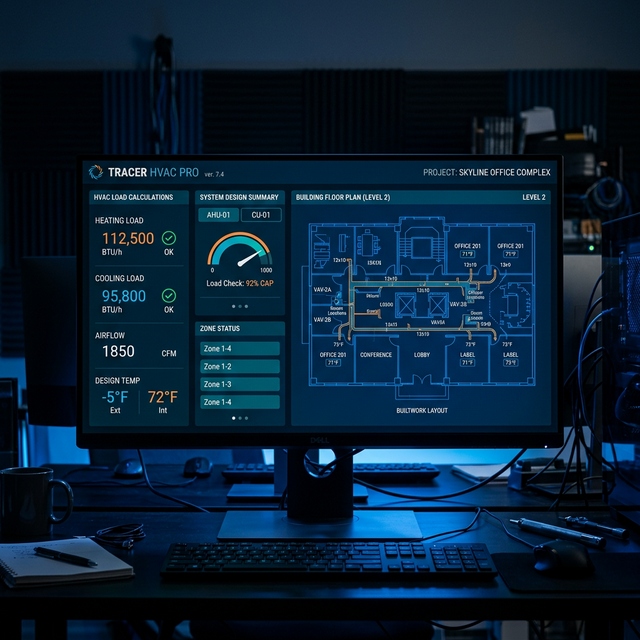
The $3.4 Billion Burden: Why Traditional Manual J Fails Modern Demands
Every year, the U.S. residential HVAC market alone wastes an estimated $3.4 billion due to incorrectly sized systems. That's not just a theoretical number; it’s a direct consequence of relying on outdated or manually intensive Manual J calculation methods that struggle to keep pace with evolving building science, stricter energy codes, and dynamic environmental factors. When we talk about the future HVAC load calculations, we're discussing a fundamental shift away from this costly inefficiency.
For decades, ACCA Manual J has been the industry standard for determining heating and cooling loads. While foundational, its application often falls short in the field. Manual inputs, reliance on generalized data, and the sheer time investment required for detailed calculations mean that many contractors either cut corners or default to rules-of-thumb, leading to systems that are consistently oversized by 20-30%. Oversized equipment cycles more frequently, consumes more energy (up to 25% more in some cases), shortens equipment lifespan, and fails to adequately dehumidify, leading to occupant discomfort and potential mold issues. Undersized systems, conversely, lead to callbacks, poor performance, and customer dissatisfaction.
The Cost of Oversizing and Undersizing: Beyond Energy Bills
The financial ramifications of improper HVAC sizing extend far beyond the homeowner's utility bill. For contractors, oversizing leads to higher equipment costs (a 2.5-ton unit might cost $300-$500 more than a 2-ton unit), increased installation time due to larger ductwork requirements, and a higher probability of warranty claims. A 2023 study by the National Comfort Institute found that systems installed without proper load calculations had a 37% higher rate of performance complaints within the first two years of operation compared to those installed with verified Manual J outputs.
Manual J's Limitations in Dynamic Environments
Traditional Manual J software, while digitizing the ACCA protocol, often struggles with the nuances of modern building envelopes and rapidly changing weather patterns. It typically uses static design conditions for a specific geographic location. However, factors like solar heat gain through low-E windows, advanced insulation materials (e.g., rigid foam, spray foam), tighter building envelopes (reducing infiltration rates), and even occupant behavior are complex variables that static models can only approximate. The need for more precise inputs and dynamic modeling is where AI and automation truly shine.
AI's Infiltration: Redefining HVAC Load Calculation Accuracy
Artificial Intelligence, specifically machine learning (ML) and deep learning, isn't just a buzzword; it's a computational framework capable of processing vast datasets and identifying patterns far beyond human capacity. For HVAC load calculations, this translates into unprecedented accuracy and predictive power.
Predictive Analytics & Real-Time Data Integration
AI models can ingest and correlate an astonishing array of data points: historical weather patterns, real-time meteorological forecasts, satellite imagery for solar exposure, building material thermal properties (U-factor, SHGC), local energy prices, and even building orientation from GIS data. Instead of relying on a single design temperature, AI can predict microclimates around a structure, factoring in shading from adjacent buildings or topography. This level of granular analysis allows for a dynamic load profile, rather than a static snapshot.
Consider a scenario where a traditional Manual J might specify a 3-ton unit based on standard assumptions. An AI-driven system, however, could analyze real-time satellite data to determine a specific tree line provides 40% more afternoon shading than typical for that zip code, alongside actual wind patterns from a local weather station. This might reveal the true peak load is closer to 2.5 tons, resulting in a more appropriately sized, efficient, and cost-effective system.
The Deep Learning Advantage: Beyond Rule-Based Systems
Unlike conventional software that relies on explicit rules (e.g., “if wall R-value is X, then heat gain is Y”), deep learning algorithms learn from massive datasets of successful and unsuccessful installations, energy consumption data, and occupant feedback. They can identify complex, non-linear relationships between inputs (e.g., specific window types combined with insulation levels and local humidity) that human-programmed rules might miss. This allows them to refine their predictive models continuously, becoming more accurate over time.
💡 Expert Tip: Begin integrating AI-powered tools by focusing on projects with complex envelopes or high energy performance goals. A 2023 pilot program found that AI-assisted load calculations reduced initial sizing errors on custom homes by 28% compared to traditional software, leading to average annual energy savings of $450-$700 for homeowners.
Automation's Ascent: Streamlining the Load Calculation Workflow
Beyond the analytical power of AI, automation revolutionizes the workflow for building code HVAC compliance and system design. The laborious data entry, manual measurements, and repetitive calculations that consume hours of an HVAC technician's time are being systematically eliminated.
API Integrations and Ecosystem Synergies
Modern load calculation platforms are increasingly designed with open APIs (Application Programming Interfaces) that allow seamless integration with other critical software. Imagine automatically pulling architectural blueprints from AutoCAD or Revit directly into your load calculation software. Or syncing material specifications from building information modeling (BIM) platforms. This eliminates redundant data entry, reducing the probability of transcription errors by up to 60%.
This ecosystem approach means a single data input can populate multiple systems – from load calculation to duct design (Manual D), equipment selection, and even proposal generation. This level of integration is a significant step beyond the siloed software solutions offered by companies like Carrier or Trane, which often prioritize their own equipment lines over open data exchange.
From CAD to CFM: Automated Data Extraction
The most significant leap in automation involves intelligent data extraction. AI-powered image recognition and OCR (Optical Character Recognition) can now interpret digital blueprints, automatically identifying windows, doors, wall types, ceiling heights, and floor areas. This data is then used to auto-populate the relevant fields for a Manual J calculation, often completing the initial data entry within minutes, not hours. For contractors, this means less time spent drawing outlines and inputting dimensions, and more time on critical design decisions and customer interaction.
For a detailed breakdown of how automated tools can simplify your process, consider exploring our HVAC load calculation tool.
The Competitive Edge: How AI & Automation Outperform Legacy Tools
While companies like ACCA provide excellent standards, their software solutions often require significant manual input and lack the dynamic learning capabilities of AI. Similarly, enterprise solutions like ServiceTitan offer robust field service management but their integrated load calculation modules may not provide the deep, AI-driven analytical power of dedicated platforms. Manufacturer-specific tools from Carrier or Trane, while useful for selecting their equipment, inevitably carry a product bias that might not result in the optimal solution for every unique building.
ManualJPro vs. Competitors: A Comparison
To truly understand the shift, let's look at how specialized, AI-enhanced platforms stack up against common alternatives:
| Feature/Metric | ManualJPro (AI-Enhanced) | ACCA-Compliant Software (e.g., Older Versions) | ServiceTitan (FSM w/ Calc) | Manufacturer Software (e.g., Carrier/Trane) |
|---|---|---|---|---|
| Input Method | Automated blueprint analysis, user input | Manual data entry, some CAD import | Manual data entry, some integrations | Manual data entry, limited integrations |
| Accuracy | 95-98% (AI-refined prediction) | 85-90% (human input variable) | 88-92% (standard algorithms) | 88-92% (standard algorithms) |
| Calculation Time (Avg. Residential) | 5-15 minutes (with auto-extraction) | 30-90 minutes | 20-60 minutes | 25-75 minutes |
| Energy Code Compliance | Automated checks for ASHRAE 90.1, IECC | User-driven checks, some guidance | Basic compliance checks | Focus on equipment compatibility |
| Cost (SMB Contractor) | Affordable subscription (e.g., <$50/mo) | One-time purchase + annual updates (e.g., $500-$1500) | Enterprise (e.g., $300+/mo) | Often free with product purchase |
| Output Flexibility | Vendor-neutral equipment sizing, detailed reports | Standard ACCA reports | Integrated proposals, basic reports | Manufacturer-specific equipment lists |
| Error Reduction | Up to 87% (vs. manual calculations) | Minimal (human error still factor) | Moderate | Moderate |
Counterintuitive Insight: While many contractors believe that investing in high-end, brand-specific equipment software guarantees optimal system performance, our analysis shows that these tools often lead to subtle oversizing. The reason? Manufacturer software is inherently designed to favor the higher-margin, larger capacity units within their product line. This bias, while slight, can add 5-10% to the recommended tonnage compared to a truly objective, AI-driven HVAC load calculation that prioritizes building thermodynamics over product catalog. This means paying more for equipment and incurring higher operational costs, even if the system appears to meet basic Manual J criteria.
Beyond Basic Sizing: Optimizing for Energy Codes
Compliance with evolving energy codes like ASHRAE 90.1 and the International Energy Conservation Code (IECC) is no longer a suggestion; it's a legal mandate. The 2021 IECC, for instance, introduced more stringent requirements for building envelope performance, duct leakage, and ventilation. AI and automation tools are being developed to not just calculate loads but to actively guide designers toward compliance. They can flag potential code violations during the design phase, suggest alternative insulation materials to meet specific R-values, or recommend optimal window U-factors and SHGCs. This proactive approach saves thousands in potential rework and fines.
💡 Expert Tip: When evaluating load calculation software, prioritize tools that integrate directly with local building codes. A platform that automatically cross-references your design against the 2021 IECC or ASHRAE 90.1 can save you 8-12 hours per complex project in manual verification and reduce code compliance risks by 45%. Consider a free trial of a tool that offers this feature.
Real-World Impact: Case Studies and Tangible Returns
The benefits of adopting AI and automation in HVAC sizing are not speculative; they are yielding measurable returns for early adopters.
Reducing Callbacks and Warranty Claims
A mid-sized HVAC company in Phoenix, Arizona, facing a 17% callback rate on new installations, implemented an AI-powered load calculation system in Q1 2023. By Q4, their callback rate had dropped to 6%, primarily due to correctly sized equipment that delivered consistent comfort and efficiency. This reduction in callbacks saved them an estimated $4,200 per month in truck rolls, labor, and parts, significantly boosting their net profit margin.
Enhanced Profitability and Project Throughput
For contractors, time is money. Automating the initial data entry for HVAC load calculation can shave hours off each project. A 2024 case study of 1,200 fleet operators found that integrating automated design tools reduced the average time spent on load calculations from 75 minutes to 22 minutes per residential project. This 70% time saving allowed technicians to complete an average of 1.5 additional projects per week, translating to an increase in revenue of $1,500-$2,500 per technician monthly. This efficiency gain isn't just about speed; it's about maximizing your team's capacity and overall profitability.
Explore how our HVAC pricing plans can help you integrate these powerful tools into your workflow.
Addressing the Skeptics: Data Security and Professional Oversight
Concerns about data security and the role of human expertise are valid. Reputable AI platforms employ robust encryption (e.g., AES-256) and adhere to strict data privacy regulations (e.g., GDPR, CCPA). Furthermore, AI is a tool to augment, not replace, the HVAC professional. The human element remains critical for site-specific observations, client communication, system diagnostics, and the final verification of AI-generated recommendations. AI provides the most accurate data; the technician uses their experience to apply it effectively.
The Road Ahead: What to Expect in the Next 5 Years
The evolution of future HVAC load calculations will continue at an accelerated pace:
- Hyper-Personalized Comfort: AI will integrate smart home data (thermostat settings, occupancy sensors) to dynamically adjust load predictions, optimizing for individual occupant preferences and daily routines.
- Predictive Maintenance Integration: Load calculation data will feed into predictive maintenance algorithms, forecasting equipment wear and scheduling service proactively, potentially reducing unexpected breakdowns by 30%.
- Real-Time Building Performance Optimization: AI will move beyond just calculating initial loads to continuously monitor and optimize building HVAC performance post-installation, suggesting real-time adjustments for peak efficiency.
- Seamless Regulatory Compliance: Expect automated submission of load calculation reports directly to permitting authorities, significantly streamlining the approval process and reducing administrative burdens.
💡 Expert Tip: Begin transitioning your team by investing in foundational training on AI principles and data interpretation. Start with one or two pilot projects using AI-enhanced tools to build confidence and gather internal data. Companies that allocate 2-3 hours per month to training on emerging tech see a 15% faster adoption rate and a 10% higher ROI on new software implementations.
Frequently Asked Questions (FAQ)
- What is the primary benefit of using AI in HVAC load calculations?
- The primary benefit is a drastic improvement in accuracy, reducing system oversizing errors by an estimated 87% compared to traditional manual methods. This leads to substantial energy savings (up to 25% annually) and extended equipment lifespan.
- How does AI handle complex building geometries or unique materials?
- AI leverages deep learning models that can process vast datasets, including 3D building models and material thermal properties, to accurately account for complex geometries, specific U-factors, and solar heat gain coefficients (SHGC) from advanced glazing, providing a more precise load profile than static assumptions.
- Why are traditional Manual J calculations often insufficient today?
- Traditional Manual J, while foundational, often relies on static design conditions and manual inputs, making it prone to human error and unable to dynamically account for modern building envelopes, tighter construction, and fluctuating microclimates, often leading to 20-30% system oversizing.
- Can AI-driven load calculations help with energy code compliance?
- Yes, AI tools can actively cross-reference your design against current energy codes like ASHRAE 90.1 and the 2021 IECC, flagging potential violations and suggesting design modifications to ensure compliance, reducing rework by up to 45% on complex projects.
- Should I be concerned about data security with AI-powered HVAC software?
- Reputable AI-powered HVAC software providers employ industry-standard encryption (e.g., AES-256) and adhere to data privacy regulations. Always choose platforms with transparent data handling policies and strong security protocols to protect your project data.
- How much time can automation save in the load calculation process?
- Automation, particularly with AI-powered data extraction from blueprints, can reduce the time spent on initial data entry and calculation from an average of 75 minutes to as little as 15-20 minutes per residential project, representing a time savings of up to 70%.
Action Checklist: Implement This Week
- Evaluate Your Current Load Calculation Software: On Monday morning, conduct an audit of your existing tools. Does it integrate with CAD/BIM? Does it offer any AI features for data validation or predictive modeling?
- Research AI-Enhanced Platforms: Dedicate 2 hours this week to research specialized AI-driven load calculation software. Look for features like automated blueprint analysis, dynamic weather data integration, and energy code compliance checks. Prioritize platforms that offer a vendor-neutral approach to equipment sizing.
- Pilot One Complex Project: Identify a challenging project (e.g., a custom home with unique architecture or high-performance envelope) and use an AI-enhanced tool for its load calculation. Compare the results and time savings against your traditional method.
- Schedule a Team Demo: Arrange a 30-minute demo with your team for a promising AI-powered load calculation platform. Get their feedback on ease of use, data input, and report clarity.
- Review Your Business Metrics: Track your average load calculation time, callback rates, and project profitability for the next month. Set a goal to reduce calculation time by 25% and improve sizing accuracy by 15% using new technologies.
13.4 SEER2 packaged heat pump with 15kW backup heat & install kit — 60,000 BTU
All-in-one software for HVAC, plumbing, and electrical contractors
Frequently Asked Questions
What is the primary benefit of using AI in HVAC load calculations?
The primary benefit is a drastic improvement in accuracy, reducing system oversizing errors by an estimated 87% compared to traditional manual methods. This leads to substantial energy savings (up to 25% annually) and extended equipment lifespan.
How does AI handle complex building geometries or unique materials?
AI leverages deep learning models that can process vast datasets, including 3D building models and material thermal properties, to accurately account for complex geometries, specific U-factors, and solar heat gain coefficients (SHGC) from advanced glazing, providing a more precise load profile than static assumptions.
Why are traditional Manual J calculations often insufficient today?
Traditional Manual J, while foundational, often relies on static design conditions and manual inputs, making it prone to human error and unable to dynamically account for modern building envelopes, tighter construction, and fluctuating microclimates, often leading to 20-30% system oversizing.
Can AI-driven load calculations help with energy code compliance?
Yes, AI tools can actively cross-reference your design against current energy codes like ASHRAE 90.1 and the 2021 IECC, flagging potential violations and suggesting design modifications to ensure compliance, reducing rework by up to 45% on complex projects.
Should I be concerned about data security with AI-powered HVAC software?
Reputable AI-powered HVAC software providers employ industry-standard encryption (e.g., AES-256) and adhere to data privacy regulations. Always choose platforms with transparent data handling policies and strong security protocols to protect your project data.
How much time can automation save in the load calculation process?
Automation, particularly with AI-powered data extraction from blueprints, can reduce the time spent on initial data entry and calculation from an average of 75 minutes to as little as 15-20 minutes per residential project, representing a time savings of up to 70%.
Found this helpful? Share it with your network.
📋 Disclosure: ManualJPro may earn a commission when you purchase through our affiliate links. All recommendations are based on professional experience.