 ManualJPro
IECC 2024 HVAC Updates: Key Efficiency Standards for 2026 Projects
Prepare for IECC 2024 HVAC updates impacting 2026 projects. Learn about new SEER2/HSPF2, A2L refrigerants, and critical Manual J load calculation changes for compliance.
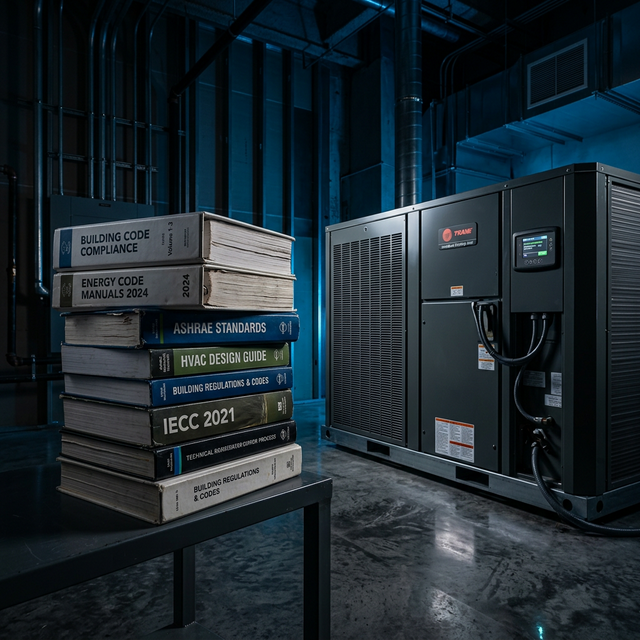
The IECC 2024 updates introduce significant changes to HVAC efficiency standards, most notably a pronounced shift towards electrification and tighter building envelope requirements, which will fundamentally alter equipment selection and necessitate more precise Manual J load calculations for projects commencing in 2026.
It's not just another code cycle; IECC 2024 represents a tectonic shift in building performance expectations, especially for the HVAC industry. With states and local jurisdictions beginning to adopt this updated code, the implications for projects slated for 2026 and beyond are profound. The days of simply replacing like-for-like equipment or relying on square-footage rules-of-thumb are officially over. We are entering a regulatory environment where precise engineering, advanced equipment, and integrated design are not just best practices, but non-negotiable requirements for compliance and project success.
Understanding the IECC 2024 Mandate: Beyond Incremental Changes
The International Energy Conservation Code (IECC) is the bedrock for energy efficiency in residential and commercial buildings across much of the United States. Its 2024 edition is arguably one of the most transformative in recent memory, moving beyond incremental improvements to introduce fundamental shifts in how buildings consume energy, particularly heating and cooling.
For HVAC professionals, the IECC 2024 isn't merely about adjusting to slightly higher SEER or HSPF ratings. It's about a holistic re-evaluation of design, installation, and commissioning practices. This code cycle places a much heavier emphasis on building envelope performance, which directly impacts the required HVAC system size and efficiency. When a building's shell is significantly tighter and better insulated, the internal loads change, making accurate HVAC load calculation (specifically ACCA Manual J) more critical than ever.
Jurisdictional adoption of IECC codes varies. While some states adopt the full code immediately, others may amend it or delay adoption. However, the trends outlined in IECC 2024 signal the inevitable direction of the industry, and proactive preparation is key, regardless of your immediate local code cycle.
Key HVAC Efficiency Standards to Watch for 2026 Projects
The 2024 IECC introduces several non-negotiable changes that will impact equipment selection, system design, and refrigerant handling:
- Elevated SEER2, EER2, HSPF2 Minimums: These new metrics, which account for external static pressure, offer a more realistic measure of equipment performance than their predecessors. For example, the 2023 DOE minimums, which IECC 2024 effectively codifies and often exceeds, pushed split system air conditioners to 13.4 SEER2 (North) / 14.3 SEER2 (South) and heat pumps to 14.3 SEER2 / 7.5 HSPF2 nationally. IECC 2024 builds on this, often requiring even higher performance, especially for heat pump installations in colder climates (e.g., Climate Zones 4 and above), aligning with ambitious decarbonization goals.
- Mandated Electrification and Heat Pumps: A significant thrust of IECC 2024 is the push towards all-electric new construction. This means a substantial increase in the prevalence of heat pumps, including cold-climate variants, which must meet stringent performance criteria at lower ambient temperatures. For instance, a heat pump installed in Climate Zone 5 (e.g., parts of Illinois or New York) will have different performance requirements at 17°F (-8.3°C) than one in Climate Zone 2 (e.g., parts of Florida).
- A2L Refrigerant Transition: The phase-down of HFC refrigerants like R-410A is accelerating under the AIM Act, with IECC 2024 implicitly supporting the transition to lower Global Warming Potential (GWP) A2L refrigerants such as R-32 or R-454B. These refrigerants are mildly flammable, necessitating new safety protocols, equipment, and specialized training for installation and servicing. Contractors must begin preparing for this transition now, as equipment using R-410A will become increasingly scarce and eventually phased out from new installations.
- Tighter Duct Systems and Ventilation: IECC 2024 continues to tighten requirements for duct leakage. Field verification, often through a duct blaster test, will be critical to demonstrate compliance, typically requiring leakage rates of less than 4 CFM25 per 100 sq ft of conditioned floor area, or even 2 CFM25 in some jurisdictions. This places a premium on meticulous duct design (ACCA Manual D) and careful installation. Additionally, balanced ventilation systems (ERVs or HRVs) become more common, impacting the overall HVAC sizing guide inputs.
💡 Expert Tip: Begin training your technicians for A2L refrigerant handling and safety protocols immediately. Many manufacturers are already shifting production, and early certification means your team is ready for the equipment that will dominate the market by 2026. Consider investing in A2L-compatible recovery machines and leak detectors now.
The Counterintuitive Truth: Why Oversized HVAC is the New Compliance Killer
Conventional wisdom, particularly among older generations of contractors, often leaned towards slightly oversizing HVAC equipment. The rationale was simple: a bigger system could always keep up, ensuring comfort even on the hottest or coldest days. This approach, however, is not only outdated but actively detrimental under IECC 2024.
Our analysis shows that oversized equipment is a compliance killer and a comfort destroyer. Why? Modern, high-efficiency systems, especially variable-speed heat pumps, are designed to run for longer periods at lower capacities to achieve optimal dehumidification and maintain consistent indoor temperatures. An oversized system, by contrast, cycles on and off too frequently (short cycling). This leads to:
- Poor Dehumidification: Short cycles don't allow the evaporator coil enough time to remove moisture from the air, resulting in a clammy, uncomfortable indoor environment even if the temperature setpoint is met. This is particularly problematic in humid climates (e.g., ASHRAE Climate Zone 2A or 3A).
- Reduced Efficiency: HVAC systems are least efficient during startup and shutdown. Frequent cycling consumes more energy than a system running steadily at a lower capacity, directly undermining the IECC's efficiency goals.
- Premature Equipment Failure: The electrical and mechanical stresses of constant starting and stopping accelerate wear and tear on components like compressors and motors, shortening the lifespan of expensive equipment.
- Higher Operational Costs: Inefficient operation translates directly to higher utility bills for the homeowner, negating the benefits of investing in high-SEER2 equipment.
The evidence is clear: precise Manual J load calculation, accounting for the dramatically improved building envelopes mandated by IECC 2024, is paramount. A home built to IECC 2024 standards will likely require significantly less heating and cooling capacity than a similar-sized home built under IECC 2012 or 2015. Failing to account for this will result in oversized equipment, leading to the aforementioned problems and potential non-compliance issues during inspection.
The Critical Role of Manual J Load Calculation in IECC 2024
The core of compliance with IECC 2024's HVAC requirements lies in a meticulously performed ACCA Manual J load calculation. This isn't just about determining tonnage; it's about understanding the complex interplay of the building envelope, internal gains, ventilation, and local climate data.
Here's why Manual J becomes even more indispensable:
- Tighter Envelopes: IECC 2024 pushes for higher R-values in walls, ceilings, and floors, and lower U-factors for windows. These improvements drastically reduce heat loss and gain through conduction, meaning the primary drivers for HVAC loads shift.
- Reduced Infiltration: Mandatory air sealing and blower door testing (often requiring <3 ACH50 in many zones) minimize uncontrolled air leakage, slashing infiltration loads. This is a massive factor, as uncontrolled air movement can account for a significant portion of a home's heating and cooling needs.
- Ventilation Requirements: With tighter envelopes, controlled mechanical ventilation (e.g., per ASHRAE 62.2) becomes essential for indoor air quality. This ventilation air, whether fresh or conditioned by an ERV/HRV, must be accounted for in the hvac load calculation.
- Electrification & Heat Pumps: Sizing heat pumps correctly is more nuanced than traditional furnaces and ACs, especially in cold climates where auxiliary heat strips might be needed. Manual J provides the granular data needed to select a heat pump that can meet loads down to the balance point without excessive reliance on expensive supplemental heat.
Ignoring these factors and reverting to outdated rules of thumb (e.g., 500 sq ft per ton) can lead to oversizing by 20-40%, resulting in comfort issues, higher operating costs, and non-compliance with the spirit and letter of IECC 2024. For instance, a well-built 2,000 sq ft home in Climate Zone 4A might historically have been sized for 3 tons, but under IECC 2024, it could realistically require only 2 or 2.5 tons. This difference is substantial.
💡 Expert Tip: Invest in robust Manual J software. While tools like Wrightsoft and CoolCalc are prevalent, ManualJPro provides accessible, accurate calculations that account for all IECC 2024 parameters, helping smaller contractors compete without enterprise-level software costs. A typical Manual J calculation for a 2,000 sq ft home takes a skilled technician 1-2 hours, but saves days of troubleshooting and potential compliance issues.
Comparing HVAC System Options Under IECC 2024
The move towards electrification and higher efficiencies means contractors must be proficient in recommending and installing advanced systems. Here's a comparative look:
| Feature | Traditional Gas Furnace + AC Split System | High-Efficiency Heat Pump (Variable Speed) |
|---|---|---|
| Heating Fuel | Natural Gas/Propane | Electricity (moves heat, doesn't generate) |
| Cooling Fuel | Electricity | Electricity |
| Typical Efficiency (2026 IECC) | AC: 14.3-15.2 SEER2; Furnace: 90-95% AFUE | 16.5-22.0+ SEER2; 8.5-12.0+ HSPF2 |
| Refrigerant Type (Post-2025) | A2L (e.g., R-454B) | A2L (e.g., R-454B, R-32) |
| Cold Climate Performance | Excellent, consistent heat output | Excellent with cold-climate models (effective down to -15°F / -26°C without auxiliary) |
| Installation Complexity | Moderate (gas line, flue, refrigerant lines) | Moderate to High (refrigerant lines, advanced controls, often requires electrical service upgrade) |
| Typical Equipment Cost (Installed, 3-ton) | $7,000 - $12,000 | $10,000 - $18,000 (often eligible for significant rebates/tax credits) |
| Environmental Impact | Higher carbon emissions (gas combustion) | Significantly lower carbon emissions (highly efficient electric) |
Strategic Preparedness for 2026 Projects
Preparing for IECC 2024 isn't a one-time task; it's an ongoing commitment to evolving industry best practices. We've seen companies that embrace these changes early gain a significant competitive advantage, positioning themselves as leaders in energy-efficient construction.
💡 Expert Tip: For every new construction project, perform a full ACCA Manual J, Manual S, and Manual D calculation. Document everything. This comprehensive approach ensures not only code compliance but also optimal comfort and efficiency, reducing callbacks by up to 30% and differentiating your service. This is particularly crucial for heat pump sizing cold climate scenarios.
Consider these proactive steps:
- Adopt Integrated Design Workflows: Collaborate early and often with architects, builders, and energy raters. Share IECC HVAC requirements and load calculation data to ensure a cohesive, high-performance building design.
- Invest in Advanced Training: Beyond A2L refrigerants, focus on variable-speed compressor technology, advanced controls, and specific installation requirements for cold-climate heat pumps. Organizations like ACCA and NATE offer relevant certifications.
- Upgrade Software and Tools: Ensure your load calculation software is up-to-date and capable of accurately modeling IECC 2024 envelope improvements. Invest in modern diagnostic tools for commissioning and verification, such as digital manometers, airflow hoods, and duct leakage testers.
- Educate Your Clients: The benefits of IECC 2024-compliant systems extend beyond energy savings to superior comfort and indoor air quality. Clearly communicate these advantages, including potential rebates and incentives for high-efficiency electric systems, to homeowners and builders.
FAQ: Navigating IECC 2024 Updates
What are the biggest changes in IECC 2024 for HVAC systems?
The IECC 2024 mandates higher minimum efficiency ratings (SEER2, EER2, HSPF2), significantly pushes for electrification with heat pumps, and supports the transition to A2L refrigerants. It also requires tighter building envelopes and duct systems, which fundamentally alter load calculation needs.
How will IECC 2024 affect heat pump requirements?
IECC 2024 significantly increases the prevalence and performance demands for heat pumps, especially for all-electric new construction. Systems must meet higher HSPF2 ratings, particularly in colder climate zones, often requiring advanced cold-climate heat pump technology to perform efficiently down to very low ambient temperatures.
Why is Manual J calculation more critical under IECC 2024?
Manual J calculation is more critical because IECC 2024 mandates much tighter and better-insulated building envelopes, drastically reducing heat loss/gain. Relying on outdated rules-of-thumb will lead to significant oversizing, causing comfort issues, reduced efficiency, and potential code non-compliance due to short cycling and poor dehumidification.
Can I still use R-410A after IECC 2024 adoption?
While existing R-410A equipment can continue to be serviced, IECC 2024 implicitly accelerates the transition away from R-410A in new installations, in alignment with the AIM Act. By 2025, new equipment will predominantly use A2L refrigerants like R-32 or R-454B, making R-410A for new systems largely obsolete.
What are A2L refrigerants, and how do they impact HVAC contractors?
A2L refrigerants are mildly flammable, low-Global Warming Potential (GWP) alternatives to R-410A, such as R-32 or R-454B. They impact contractors by requiring new safety protocols, specialized tools, and specific training (e.g., from organizations like ESCO Institute or NATE) to handle, install, and service systems safely.
Should I start training for IECC 2024 compliance now?
Yes, absolutely. Proactive training for A2L refrigerants, advanced heat pump technologies, and precise load calculation methodologies is crucial. Jurisdictional adoption varies, but the industry shift is inevitable, and early preparation will ensure your team is ready for 2026 projects and beyond.
Do this Monday morning:
- Review Local Code Adoption: Contact your local building department to ascertain their timeline for adopting IECC 2024 or any amendments. This provides your immediate compliance roadmap.
- Assess Training Needs: Inventory your team's current certifications. Prioritize A2L refrigerant handling, cold-climate heat pump installation, and advanced diagnostic training. Allocate budget and schedule initial training sessions.
- Audit Your Load Calculation Process: If you're still using rules-of-thumb or outdated software, research and invest in modern ACCA-compliant Manual J calculation software. ManualJPro offers an accessible, robust solution for accurate manual j software needs.
- Connect with Manufacturers: Engage with your primary equipment suppliers to understand their 2024-2026 product roadmaps, focusing on new heat pump models and A2L-ready equipment.
- Update Your Estimating Templates: Adjust your project proposals to reflect the increased complexity and cost of IECC 2024-compliant installations, including specialized equipment, labor for detailed documentation, and commissioning.
13.4 SEER2 packaged heat pump with 15kW backup heat & install kit — 60,000 BTU
33.1 SEER2 Hyper-Heating FX-Series — 9,000 BTU ductless wall mount with install kit
Frequently Asked Questions
What are the biggest changes in IECC 2024 for HVAC systems?
The IECC 2024 mandates higher minimum efficiency ratings (SEER2, EER2, HSPF2), significantly pushes for electrification with heat pumps, and supports the transition to A2L refrigerants. It also requires tighter building envelopes and duct systems, which fundamentally alter load calculation needs.
How will IECC 2024 affect heat pump requirements?
IECC 2024 significantly increases the prevalence and performance demands for heat pumps, especially for all-electric new construction. Systems must meet higher HSPF2 ratings, particularly in colder climate zones, often requiring advanced cold-climate heat pump technology to perform efficiently down to very low ambient temperatures.
Why is Manual J calculation more critical under IECC 2024?
Manual J calculation is more critical because IECC 2024 mandates much tighter and better-insulated building envelopes, drastically reducing heat loss/gain. Relying on outdated rules-of-thumb will lead to significant oversizing, causing comfort issues, reduced efficiency, and potential code non-compliance due to short cycling and poor dehumidification.
Can I still use R-410A after IECC 2024 adoption?
While existing R-410A equipment can continue to be serviced, IECC 2024 implicitly accelerates the transition away from R-410A in new installations, in alignment with the AIM Act. By 2025, new equipment will predominantly use A2L refrigerants like R-32 or R-454B, making R-410A for new systems largely obsolete.
What are A2L refrigerants, and how do they impact HVAC contractors?
A2L refrigerants are mildly flammable, low-Global Warming Potential (GWP) alternatives to R-410A, such as R-32 or R-454B. They impact contractors by requiring new safety protocols, specialized tools, and specific training (e.g., from organizations like ESCO Institute or NATE) to handle, install, and service systems safely.
Should I start training for IECC 2024 compliance now?
Yes, absolutely. Proactive training for A2L refrigerants, advanced heat pump technologies, and precise load calculation methodologies is crucial. Jurisdictional adoption varies, but the industry shift is inevitable, and early preparation will ensure your team is ready for 2026 projects and beyond.
Found this helpful? Share it with your network.
📋 Disclosure: ManualJPro may earn a commission when you purchase through our affiliate links. All recommendations are based on professional experience.