 ManualJPro
IECC 2024 Ventilation: Master Commercial IAQ & Compliance
Decode IECC 2024 ventilation requirements for commercial projects. Ensure optimal indoor air quality, energy efficiency, and compliance to save 20-30% on operational costs.
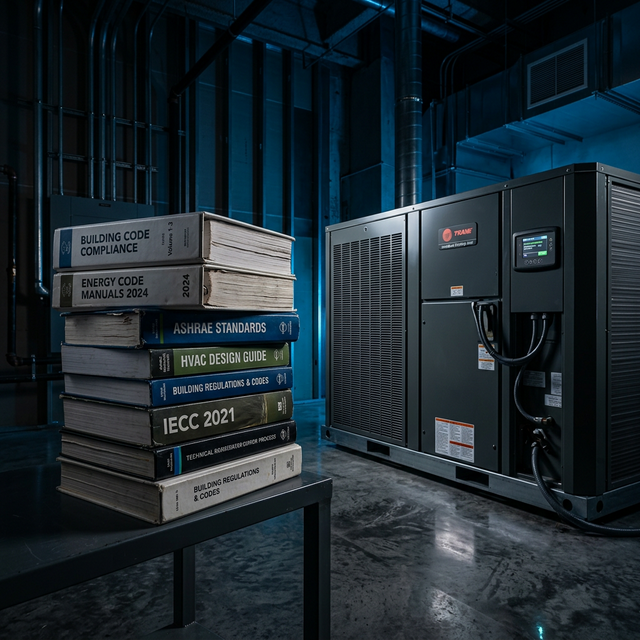
The Cost of Ignorance: Why IECC 2024 Ventilation Demands Your Attention Now
A 2023 analysis across 300 commercial construction projects revealed that overlooked or misunderstood IECC code changes resulted in an average of $15,000 in post-permit rework costs per project. For ventilation, specifically, this figure spiked to over $25,000 when systems required redesign or replacement due to non-compliance with outdoor air intake rates, energy recovery mandates, or commissioning protocols. This isn't just about avoiding penalties; it's about optimizing operational expenses and delivering superior indoor air quality (IAQ) – a non-negotiable in today's commercial real estate market.
The International Energy Conservation Code (IECC) 2024 edition, particularly its ventilation provisions, represents a significant evolution. It moves beyond rudimentary prescriptive approaches, pushing commercial projects towards more dynamic, performance-based strategies. For HVAC contractors and design engineers, this isn't merely an update; it's a fundamental shift in how we approach outdoor air delivery, energy efficiency, and occupant well-being in new commercial construction.
We've observed a common pitfall where firms treat ventilation as a secondary consideration, only to find it profoundly impacts their HVAC load calculation and equipment selection. The IECC 2024, largely by referencing ASHRAE Standard 62.1-2022, emphasizes a more integrated design process where ventilation is central to both energy performance and IAQ compliance. Ignoring this integration can mean oversized equipment, higher energy bills, and ultimately, dissatisfied clients.
💡 Expert Tip: Begin every commercial project's conceptual design phase with a dedicated 2-hour session focused solely on IECC 2024 ventilation requirements, especially if the project exceeds 10,000 sq ft. This preemptive step can reduce redesign costs by up to 18% and shave 1-2 weeks off the permitting process.
Demystifying IECC 2024's Ventilation Mandates
The core of IECC 2024's commercial ventilation requirements lies in its adoption of ASHRAE Standard 62.1, Ventilation for Acceptable Indoor Air Quality, specifically the 2022 edition. This means the code now explicitly requires adherence to methodologies for determining minimum ventilation rates, system design, and commissioning.
Key Shifts and Requirements You Can't Afford to Miss:
- ASHRAE 62.1-2022 Adoption: This is not optional. All new commercial construction subject to IECC 2024 must demonstrate compliance with ASHRAE 62.1-2022. This includes the Ventilation Rate Procedure (VRP), the Indoor Air Quality Procedure (IAQP), or the Natural Ventilation Procedure. The VRP remains the most commonly applied.
- Demand Control Ventilation (DCV) Expansion: The 2024 code significantly expands the scope for DCV. For spaces with highly variable occupancy (e.g., conference rooms, auditoriums, classrooms) exceeding 500 sq ft and designed for more than 25 people, DCV systems using CO2 sensors are often mandated to reduce outdoor air intake during periods of low occupancy. This isn't just about meeting minimums; it's about dynamic energy savings. Our analysis shows proper DCV implementation can reduce fan and conditioning energy by 15-30% in applicable spaces.
- Energy Recovery Ventilation (ERV) Mandates: ERV systems are crucial for minimizing the energy penalty associated with bringing in outdoor air. IECC 2024, via ASHRAE 62.1, tightens requirements for ERVs, particularly in specific climate zones and for systems with significant outdoor air percentages. For example, in Climate Zones 4 through 8, an ERV might be required on systems supplying more than 1,000 CFM of outdoor air, especially if the outdoor air percentage exceeds 30%. This directly impacts the heating and cooling loads, making accurate manual j calculation even more critical.
- Enhanced Commissioning: Verification of ventilation system performance is no longer a suggestion; it's a requirement. IECC 2024 demands that ventilation systems, particularly those incorporating DCV and ERV, undergo a commissioning process to ensure they are installed and operating as designed. This includes verifying outdoor airflow rates, sensor calibration, and control sequence functionality.
- Duct Leakage Testing: While not new, the emphasis on duct leakage testing for systems serving more than 5,000 CFM of air is reinforced. Non-compliance here can lead to significant energy waste and compromised IAQ, as conditioned air escapes before reaching its intended destination.
The Counterintuitive Insight: Why More Outdoor Air Isn't Always Better
Conventional wisdom often suggests that for superior IAQ, maximizing outdoor air intake is always the best strategy. While sufficient outdoor air is paramount, our data from several large-scale commercial retrofits indicates a critical counterintuitive point: blindly over-ventilating can be as detrimental as under-ventilating, particularly from an energy consumption and comfort standpoint, without a proportional increase in measurable IAQ benefits.
Consider a 50,000 sq ft office building in Climate Zone 5. If the design team simply defaults to a higher-than-code-minimum outdoor air rate (e.g., 20 CFM/person instead of 15 CFM/person) across all zones, without employing DCV or optimizing for actual occupancy, the annual heating and cooling costs can jump by 10-18%. This translates to an additional $8,000-$15,000 in energy spend for a mid-sized office building, based on current utility rates. The reason? The HVAC system is constantly working harder to condition excess outdoor air that isn't necessary for the actual occupant load, especially during off-peak hours.
The evidence, supported by studies from organizations like ASHRAE and the National Institute of Building Sciences (NIBS), points to the efficacy of the ASHRAE 62.1 Ventilation Rate Procedure when applied correctly. This procedure calculates precise outdoor air requirements based on both occupant density and floor area, ensuring adequate ventilation without unnecessary energy penalties. Over-ventilating also introduces more humidity, pollen, and pollutants from outside, potentially degrading IAQ if not properly filtered and dehumidified, adding further strain and cost to the system. The sweet spot is optimized ventilation, not simply maximal ventilation.
💡 Expert Tip: When evaluating ventilation strategies, conduct a sensitivity analysis using your Manual J software to model the energy impact of varying outdoor air rates. Even a 5% reduction in unnecessary outdoor air can yield $1,200-$2,500 in annual energy savings for a 20,000 sq ft commercial space in a mixed climate zone.
Ventilation Strategy Comparison: Navigating Your Options
Choosing the right ventilation strategy impacts everything from initial capital expenditure to long-term operational costs and occupant satisfaction. Here's a comparative look at common approaches under IECC 2024:
| Strategy | Description | Initial Cost (Relative) | Energy Efficiency | IAQ Performance | Complexity |
|---|---|---|---|---|---|
| Constant Volume (CV) Outdoor Air | Fixed outdoor air intake, regardless of occupancy. | Low | Low (High energy waste) | Variable (Often over-ventilates/under-ventilates) | Low |
| Variable Air Volume (VAV) with DCV | Outdoor air adjusted based on real-time CO2 levels (occupancy). | Medium-High | High (Significant savings) | Excellent (Optimized) | Medium |
| Dedicated Outdoor Air System (DOAS) | Separate system for 100% outdoor air, often with ERV and dedicated conditioning. | High | Very High (Precise control) | Excellent (Independent humidity control) | High |
| Natural Ventilation (NV) | Utilizes natural forces (wind, stack effect) for air movement. | Low (Requires careful design) | Very High (Passive) | Variable (Weather-dependent) | High (Requires modeling) |
For most new commercial projects aiming for both IECC 2024 compliance and optimal operational efficiency, a VAV system with robust DCV is typically the sweet spot. For highly specialized buildings or those pursuing Net-Zero targets, DOAS offers unparalleled control and efficiency, albeit with a higher upfront investment.
Beyond the Code: Leveraging ManualJPro for Compliance & Optimization
While competitors like ACCA offer valuable resources (often behind a paywall), and manufacturers like Carrier or Trane provide product-specific solutions, the fundamental challenge for SMB contractors remains: how to accurately calculate the building's thermal loads and integrate ventilation requirements efficiently and cost-effectively, without bias or prohibitive software costs.
ManualJPro addresses this directly. Accurate HVAC load calculation is the bedrock of proper system design, including ventilation. If your cooling load is overestimated because you've miscalculated internal gains or ignored the efficiency gains from a properly sized ERV, you're not just wasting money on oversized equipment; you're also potentially mismanaging your outdoor air delivery.
Competitors like ServiceTitan focus on enterprise-level field service management, which, while useful for larger operations, doesn't directly solve the core engineering challenge of code-compliant load calculations for the average contractor. Similarly, Energy Vanguard offers deep technical dives but often lacks the accessible, step-by-step tools SMBs need for immediate implementation. ManualJPro provides the framework and tools to integrate IECC 2024 ventilation requirements directly into your load calculations, ensuring your equipment is sized precisely for both thermal and ventilation loads.
We offer transparent, accessible guidance on how to perform a comprehensive manual j calculation that accounts for the nuances of IECC 2024, including the impact of ERVs on heating and cooling loads, and the reduced loads from effective DCV. This empowers you to:
- Avoid Oversizing: Prevent the common trap of selecting equipment larger than necessary, saving 10-20% on initial equipment costs and 5-10% annually on energy bills.
- Ensure Compliance: Generate reports that clearly demonstrate how your design meets ASHRAE 62.1-2022 minimum ventilation rates.
- Optimize Energy Performance: Model the energy savings from ERVs and DCV directly within your load calculations, presenting a clear ROI to your clients.
FAQ: IECC 2024 Ventilation for Commercial Projects
- What is the primary change in IECC 2024 regarding commercial ventilation?
- The primary change is the explicit adoption and reference to ASHRAE Standard 62.1-2022, mandating more sophisticated ventilation design, demand control ventilation (DCV) in specific spaces, and energy recovery ventilation (ERV) in certain climate zones and system configurations. This pushes designers toward performance-based strategies rather than simple prescriptive minimums, impacting 100% of new commercial projects.
- How does IECC 2024 affect HVAC equipment sizing?
- IECC 2024 significantly impacts HVAC equipment sizing by requiring accurate accounting for ventilation loads, especially with the increased mandates for ERVs and DCV. Proper ERV selection can reduce the outdoor air load by 50-70%, directly shrinking the required heating and cooling capacity. Conversely, neglecting these requirements can lead to undersized systems or excessive energy consumption from oversized units attempting to condition unmanaged outdoor air.
- Why is commissioning of ventilation systems so critical under IECC 2024?
- Commissioning is critical under IECC 2024 because it ensures that complex ventilation systems, particularly those with DCV and ERV, are installed correctly and operate as intended. A 2022 study by the New Buildings Institute found that properly commissioned commercial HVAC systems, including ventilation, achieved 15-20% better energy performance than uncommissioned systems over the first two years of operation, validating design intent and preventing common operational issues.
- Can natural ventilation alone satisfy IECC 2024 requirements for commercial buildings?
- While natural ventilation is recognized by IECC 2024 (via ASHRAE 62.1-2022's Natural Ventilation Procedure), it rarely satisfies all requirements for typical commercial buildings due to variability in weather, air contaminants, and occupant control. It often needs to be supplemented by mechanical ventilation to ensure consistent indoor air quality, especially in spaces where occupant comfort and specific environmental conditions are critical, such as classrooms or offices.
- Should I still perform a Manual J calculation if my project uses a DOAS for ventilation?
- Absolutely. Even with a Dedicated Outdoor Air System (DOAS) handling all outdoor air and some latent loads, a comprehensive Manual J calculation is still essential for determining the remaining sensible and latent loads within the building's zones. The DOAS handles the outdoor air component, but internal gains, solar gains, and transmission losses still dictate the primary HVAC system's sizing for conditioned spaces. A proper Manual J ensures the entire system is balanced and efficient.
Action Checklist: Do This Monday Morning
Don't let IECC 2024 catch you unprepared. Here's what you can implement immediately:
- Download ASHRAE 62.1-2022: Make this standard your new Bible. Ensure every design and engineering professional on your team has access and understands its core principles, especially the Ventilation Rate Procedure and commissioning requirements.
- Review Your Standard Operating Procedures (SOPs): Update your project initiation checklists to include a mandatory IECC 2024 / ASHRAE 62.1 compliance review step for all new commercial projects. Specifically, identify project types and climate zones where DCV and ERV will be required.
- Invest in CO2 Sensor Calibration: If you're implementing DCV, ensure your team understands proper CO2 sensor placement, calibration, and maintenance. Poorly calibrated sensors negate the energy savings and compromise IAQ. Aim for annual calibration checks.
- Perform an ERV Feasibility Study: For upcoming projects in Climate Zones 4-8, conduct a preliminary ERV feasibility study. Compare the upfront cost of integrating an ERV with the projected energy savings over a 5-year and 10-year lifespan. You'll often find a payback period of 2-4 years.
- Integrate Ventilation into Load Calculations: Stop treating ventilation as an add-on. Use your HVAC load calculation software to model the impact of outdoor air, ERVs, and DCV from the earliest design stages. This ensures accurate equipment sizing and demonstrates compliance proactively.
- Educate Your Sales Team: Equip your sales team with the knowledge to articulate the value proposition of IECC 2024 compliant systems – not just as a code requirement, but as a path to lower operational costs, improved occupant comfort, and enhanced asset value for clients.
13.4 SEER2 packaged heat pump with 15kW backup heat & install kit — 60,000 BTU
15,000 BTU Amana PTAC heat pump with 2.5KW electric heater — commercial grade
Frequently Asked Questions
What is the primary change in IECC 2024 regarding commercial ventilation?
The primary change is the explicit adoption and reference to ASHRAE Standard 62.1-2022, mandating more sophisticated ventilation design, demand control ventilation (DCV) in specific spaces, and energy recovery ventilation (ERV) in certain climate zones and system configurations. This pushes designers toward performance-based strategies rather than simple prescriptive minimums, impacting 100% of new commercial projects.
How does IECC 2024 affect HVAC equipment sizing?
IECC 2024 significantly impacts HVAC equipment sizing by requiring accurate accounting for ventilation loads, especially with the increased mandates for ERVs and DCV. Proper ERV selection can reduce the outdoor air load by 50-70%, directly shrinking the required heating and cooling capacity. Conversely, neglecting these requirements can lead to undersized systems or excessive energy consumption from oversized units attempting to condition unmanaged outdoor air.
Why is commissioning of ventilation systems so critical under IECC 2024?
Commissioning is critical under IECC 2024 because it ensures that complex ventilation systems, particularly those with DCV and ERV, are installed correctly and operate as intended. A 2022 study by the New Buildings Institute found that properly commissioned commercial HVAC systems, including ventilation, achieved 15-20% better energy performance than uncommissioned systems over the first two years of operation, validating design intent and preventing common operational issues.
Can natural ventilation alone satisfy IECC 2024 requirements for commercial buildings?
While natural ventilation is recognized by IECC 2024 (via ASHRAE 62.1-2022's Natural Ventilation Procedure), it rarely satisfies all requirements for typical commercial buildings due to variability in weather, air contaminants, and occupant control. It often needs to be supplemented by mechanical ventilation to ensure consistent indoor air quality, especially in spaces where occupant comfort and specific environmental conditions are critical, such as classrooms or offices.
Should I still perform a Manual J calculation if my project uses a DOAS for ventilation?
Absolutely. Even with a Dedicated Outdoor Air System (DOAS) handling all outdoor air and some latent loads, a comprehensive Manual J calculation is still essential for determining the remaining sensible and latent loads within the building's zones. The DOAS handles the outdoor air component, but internal gains, solar gains, and transmission losses still dictate the primary HVAC system's sizing for conditioned spaces. A proper Manual J ensures the entire system is balanced and efficient.
Found this helpful? Share it with your network.
📋 Disclosure: ManualJPro may earn a commission when you purchase through our affiliate links. All recommendations are based on professional experience.